
Preserving Motion While Relieving Pressure on the Spinal Cord
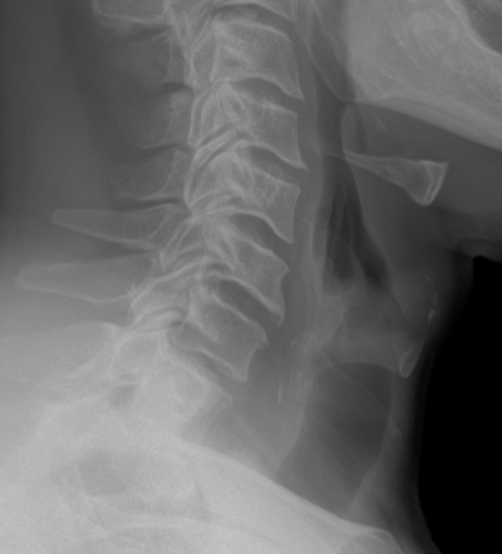
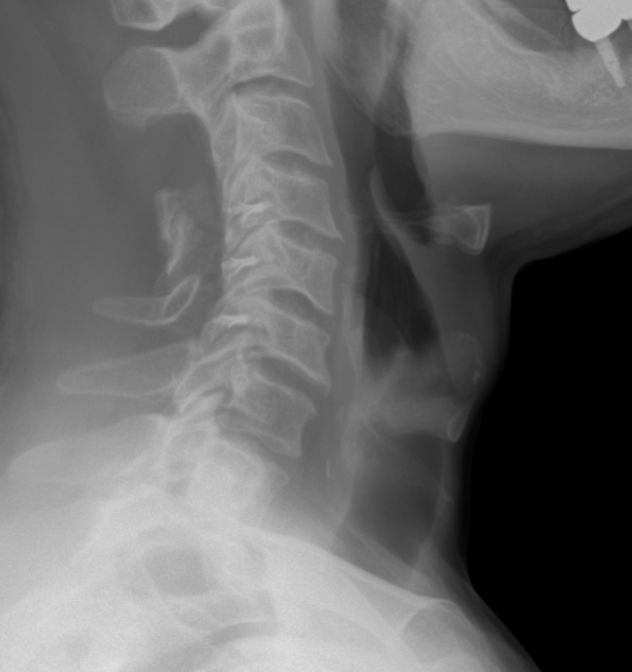
If you are experiencing neck pain, numbness, weakness, difficulty with balance, or loss of hand coordination, you may be suffering from cervical spinal stenosis or spinal cord compression. At Barbour Orthopaedics & Spine, our spine specialists offer advanced surgical treatments, including Laminoplasty, to relieve pressure on the spinal cord while preserving the natural motion of the cervical spine.
What Is a Laminoplasty?
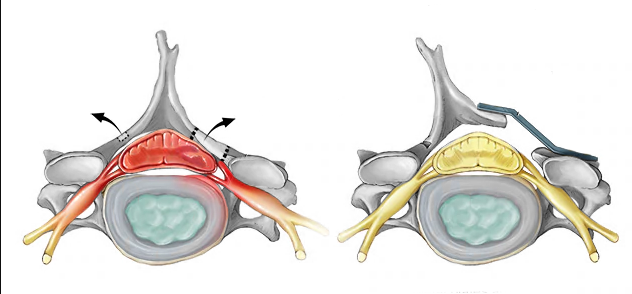
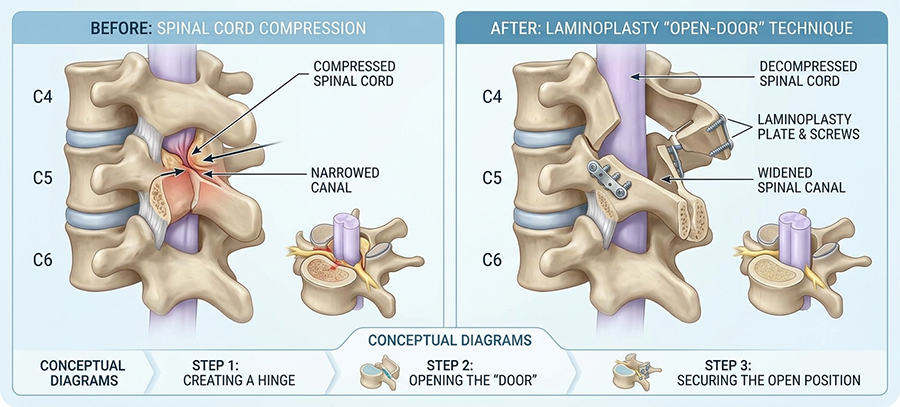
A laminoplasty is a specialized surgical procedure performed to treat cervical spinal stenosis and cervical myelopathy by creating more space for the spinal cord.
Rather than removing the lamina (the bony roof of the spinal canal), as is done in a laminectomy, a laminoplasty carefully reshapes and repositions the lamina to expand the spinal canal. This “opens” the spinal canal and relieves pressure on the spinal cord while maintaining stability and preserving motion in the neck.
Because the procedure preserves much of the spine’s natural anatomy, laminoplasty can be an excellent option for appropriately selected patients.
Conditions Treated with Laminoplasty
A laminoplasty may be recommended for patients suffering from:
- Cervical spinal stenosis
- Cervical myelopathy
- Multilevel spinal cord compression
- Degenerative changes of the cervical spine
- Ossification of the posterior longitudinal ligament (OPLL)
- Progressive neurological symptoms caused by spinal cord compression
Common Symptoms
Patients who may benefit from a laminoplasty often experience:
- Chronic neck pain
- Numbness or tingling in the arms or hands
- Weakness in the arms or legs
- Difficulty with balance or walking
- Loss of hand coordination or dexterity
- Difficulty buttoning clothing or writing
- Frequent falls or feelings of unsteadiness
- Progressive neurological decline
Because spinal cord compression can worsen over time, early evaluation and treatment are important.
When Is Surgery Recommended?
Conservative treatments may include:
- Physical therapy
- Anti-inflammatory medications
- Activity modification
- Pain management strategies
- Cervical injections in select cases
However, when spinal cord compression leads to progressive neurological symptoms, surgery is often recommended to prevent further deterioration and preserve function.
How Is a Laminoplasty Performed?
A laminoplasty is typically performed under general anesthesia.
During the procedure:
- An incision is made in the back of the neck.
- The muscles are carefully moved aside to expose the cervical spine.
- The surgeon creates a controlled opening in the lamina.
- The lamina is gently repositioned to enlarge the spinal canal.
- Small plates or spacers may be used to hold the lamina in its new position.
- The incision is closed, and recovery begins.
The goal of the procedure is to decompress the spinal cord while maintaining spinal stability and preserving motion whenever possible.

Benefits of Laminoplasty
Potential benefits of laminoplasty include:
- Relief of spinal cord compression
- Preservation of cervical motion
- Improved balance and coordination
- Reduced numbness and weakness
- Prevention of further neurological deterioration
- Improved hand function and dexterity
- Avoidance of fusion in appropriately selected patients
- Improved quality of life
Recovery After Surgery
Recovery varies from patient to patient depending on the severity of spinal cord compression and overall health.
Following surgery, patients may expect:
- Walking soon after surgery
- Gradual return to light activities over several weeks
- Physical therapy to improve strength, flexibility, and balance
- Continued neurological improvement over several months
Because nerves and the spinal cord heal gradually, improvements in symptoms may continue for an extended period following surgery.
Risks of Delaying Treatment
Untreated cervical spinal cord compression can lead to progressive symptoms, including:
- Increasing weakness
- Difficulty walking
- Loss of hand function
- Chronic pain
- Permanent neurological deficits
Early diagnosis and treatment may help prevent irreversible nerve damage.
Why Choose Barbour Orthopaedics & Spine?
At Barbour Orthopaedics & Spine, we are committed to providing advanced spine care using the latest technologies and evidence-based treatment approaches.

The Barbour Difference:
✅ Fellowship-trained spine specialists
✅ Advanced MRI, CT Scan, and Digital X-Ray services on-site
✅ Comprehensive spine care under one roof
✅ Expertise in complex cervical spine conditions
✅ Personalized treatment plans tailored to each patient
✅ Minimally invasive and motion-preserving surgical options whenever appropriate
✅ Compassionate care focused on restoring function and quality of life
Take the First Step Toward Relief
If neck pain, weakness, numbness, or difficulty with balance is affecting your daily life, the specialists at Barbour Orthopaedics & Spine are here to help.
Our team can determine whether a Laminoplasty may be the right treatment option to relieve spinal cord compression while preserving motion in your neck.

Your Movement Matters.
Contact Barbour Orthopaedics & Spine today to schedule an evaluation and learn more about our advanced cervical spine treatment options.