
Minimally Invasive Relief for Herniated Disc Pain
Chronic back or neck pain caused by a herniated disc can make everyday activities difficult and significantly impact your quality of life. At Barbour Orthopaedics & Spine, our spine specialists offer advanced, minimally invasive solutions, including Endoscopic Discectomy, to help relieve nerve compression, reduce pain, and get you back to doing what you love.
What Is an Endoscopic Discectomy?
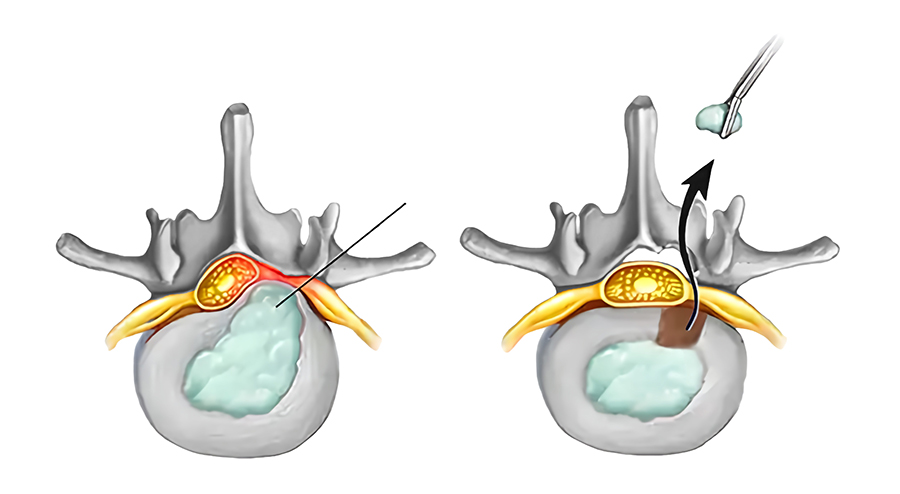
An endoscopic discectomy is a state-of-the-art, minimally invasive spine procedure used to remove a portion of a herniated or damaged disc that is pressing on a spinal nerve.
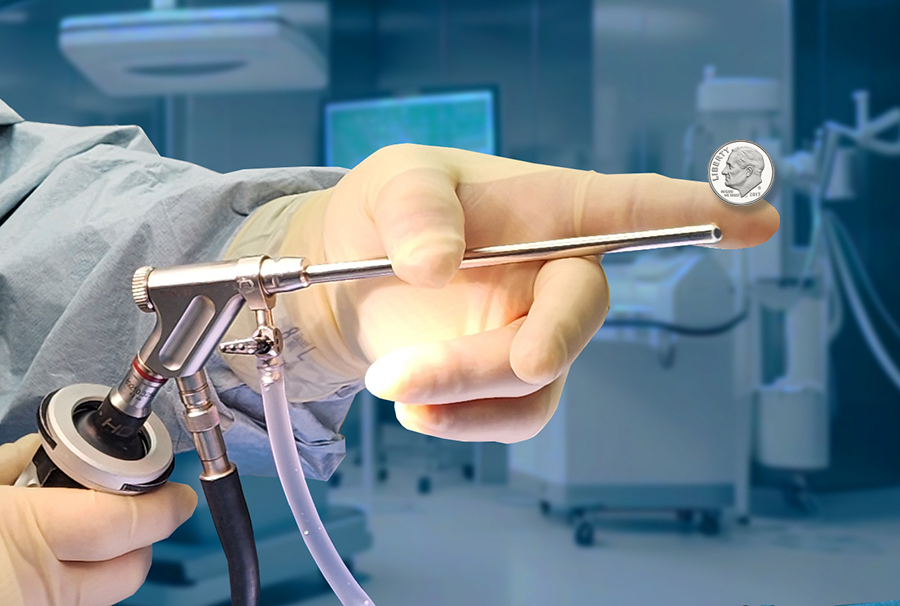
Unlike traditional open spine surgery, this procedure is performed through a very small incision using a specialized camera called an endoscope. The endoscope allows your surgeon to visualize the affected area with exceptional precision while minimizing disruption to surrounding muscles and tissues.
The goal of an endoscopic discectomy is to relieve pressure on the affected nerve, reduce pain, and restore normal function.
Conditions Treated with Endoscopic Discectomy
An endoscopic discectomy may be recommended for patients suffering from:
- Herniated lumbar discs
- Herniated cervical discs
- Sciatica
- Cervical or lumbar radiculopathy (pinched nerves)
- Disc-related leg or arm pain
- Foraminal stenosis caused by disc protrusion
- Persistent nerve compression symptoms that have not responded to conservative treatment
Common Symptoms
Patients who may benefit from an endoscopic discectomy often experience:
Lumbar Disc Symptoms:
- Lower back pain
- Pain radiating into the buttocks, legs, or feet
- Numbness or tingling in the legs
- Weakness in the lower extremities
- Difficulty standing, walking, or sitting for prolonged periods
Cervical Disc Symptoms:
- Neck pain
- Pain radiating into the shoulders, arms, or hands
- Numbness or tingling in the fingers
- Weakness in the upper extremities
When Is Surgery Recommended?
Most patients begin with conservative treatment options, including:
- Physical therapy
- Anti-inflammatory medications
- Activity modification
- Epidural steroid injections
- Chiropractic care
- Home exercise programs
If symptoms persist despite nonsurgical treatment, worsen over time, or result in neurological deficits such as weakness, an endoscopic discectomy may be recommended.
How Is an Endoscopic Discectomy Performed?
The procedure is typically performed in an outpatient setting and may be done under local anesthesia with sedation or general anesthesia, depending on the patient’s condition and the location of the disc herniation.
During the procedure:
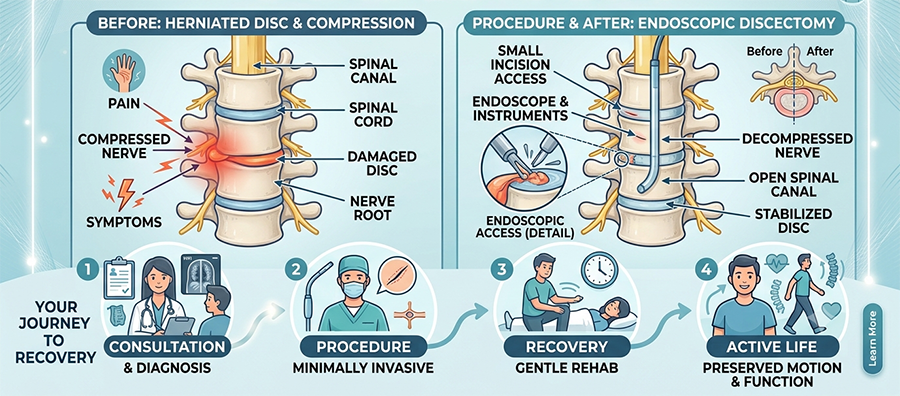
- A small incision, often less than one centimeter in length, is made near the affected area.
- A specialized tubular system and endoscope are inserted through the incision.
- The surgeon identifies the compressed nerve and the portion of the herniated disc causing the symptoms.
- The damaged disc material is carefully removed.
- The instruments are removed, and the small incision is closed.
Because the procedure preserves surrounding muscles and tissues, many patients experience less postoperative pain and a faster recovery compared to traditional open spine surgery.
Benefits of Endoscopic Discectomy
Potential benefits include:
- Extremely small incisions
- Minimal muscle and soft tissue disruption
- Reduced postoperative pain
- Less blood loss
- Lower risk of infection
- Shorter recovery time
- Faster return to work and normal activities
- Outpatient, same-day procedure
- Significant relief of nerve-related symptoms
Recovery After Surgery
Recovery times vary, but many patients experience rapid improvement in their symptoms.
Following surgery, patients may expect:
- Walking shortly after the procedure
- Same-day discharge
- Return to light activities within days to weeks
- Gradual increase in activity as healing progresses
- Physical therapy when appropriate to improve strength and flexibility
Your physician will provide individualized postoperative instructions and a recovery plan tailored to your specific condition and goals.
Why Choose Barbour Orthopaedics & Spine?
At Barbour Orthopaedics & Spine, we are committed to delivering exceptional spine care through advanced technology and minimally invasive techniques designed to improve outcomes and reduce recovery time.

The Barbour Difference:
✅ Fellowship-trained spine specialists
✅ Advanced MRI, CT Scan, and Digital X-Ray services on-site
✅ Cutting-edge minimally invasive and endoscopic spine procedures
✅ Comprehensive spine care under one roof
✅ Personalized treatment plans for every patient
✅ Smaller incisions, less pain, and quicker recovery
✅ Compassionate, patient-centered care focused on restoring quality of life
Take the First Step Toward Relief
If chronic neck pain, back pain, sciatica, or nerve symptoms are interfering with your daily life, the specialists at Barbour Orthopaedics & Spine are here to help.
Our team can determine whether an Endoscopic Discectomy may be the right treatment option for your condition.

Your Movement Matters.
Contact Barbour Orthopaedics & Spine today to schedule an evaluation and take the first step toward lasting pain relief and improved mobility.