
Advanced Minimally Invasive Relief for Sacroiliac (SI) Joint Pain
Chronic low back pain can make even the simplest activities difficult. For many patients, the source of their pain may actually be the sacroiliac (SI) joint rather than the spine itself. At Barbour Orthopaedics & Spine, we offer advanced treatment options, including the CORUS™ Procedure, to help patients find lasting relief from SI joint dysfunction with a minimally invasive approach.
What Is the Sacroiliac (SI) Joint?
The sacroiliac joints are located where the sacrum (the triangular bone at the base of the spine) connects to the pelvis. These joints play an essential role in transferring weight and forces between the upper body and lower extremities.
When the SI joint becomes inflamed, unstable, or degenerates over time, it can cause significant pain and dysfunction.
What Is the CORUS™ Procedure?
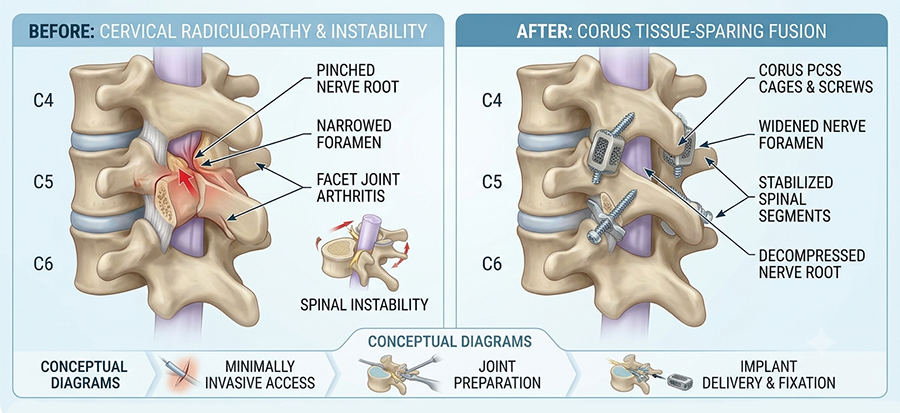
The CORUS™ Procedure is a minimally invasive posterior SI joint fusion procedure designed to stabilize the sacroiliac joint and reduce pain caused by SI joint dysfunction.
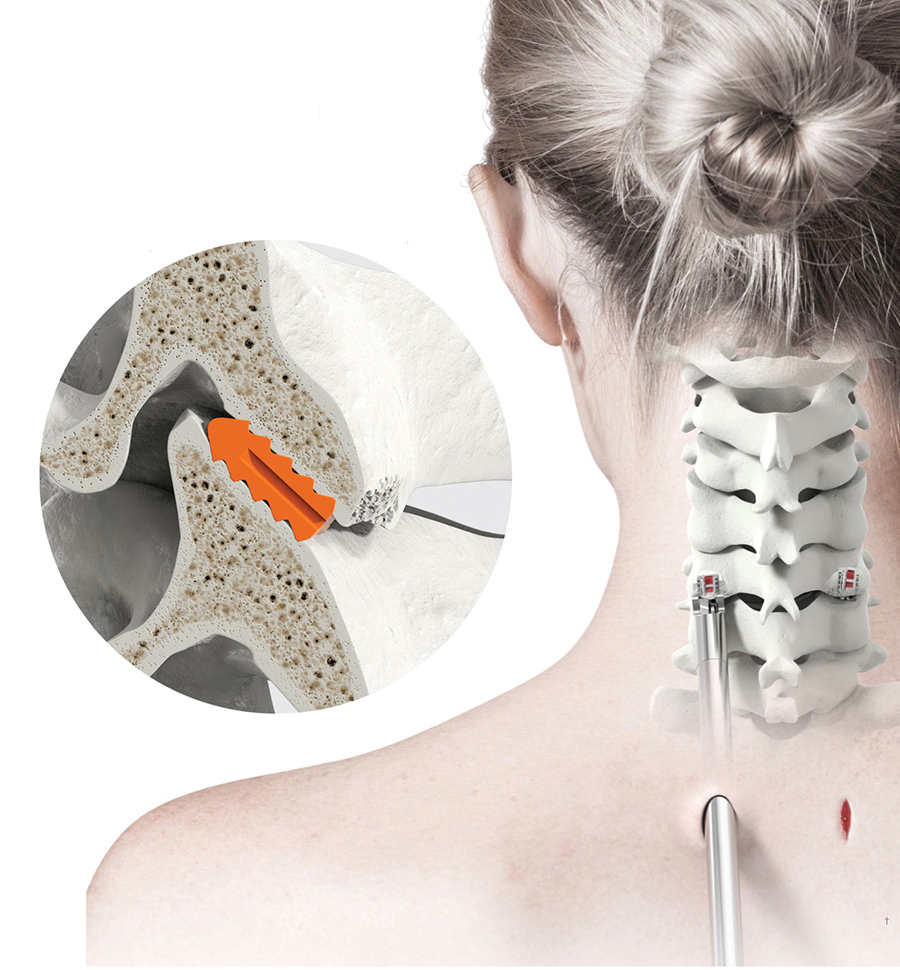
Using specialized instruments and advanced imaging guidance, the procedure involves placing an implant across the SI joint through a small incision. By stabilizing the joint and encouraging bone growth across the fusion site, the CORUS procedure can provide long-term relief for appropriately selected patients.
Conditions Treated with the CORUS Procedure
The CORUS procedure may be recommended for patients suffering from:
- Chronic sacroiliac joint dysfunction
- Degenerative sacroiliitis
- SI joint instability
- Persistent low back pain originating from the SI joint
- SI joint pain following previous lumbar fusion surgery
- Chronic pelvic pain related to SI joint dysfunction
Common Symptoms of SI Joint Dysfunction
Patients with SI joint pain may experience:
- Pain in the lower back, buttocks, hips, or groin
- Pain that worsens with standing, walking, climbing stairs, or prolonged sitting
- Pain when transitioning from sitting to standing
- Tenderness over the SI joint region
- Pain radiating into the thigh or leg
- Difficulty performing daily activities due to chronic discomfort
Because SI joint pain can mimic other spinal conditions, a thorough evaluation is important to determine the true source of symptoms.
When Is the CORUS Procedure Recommended?
Most patients begin with conservative treatment options, including:
- Physical therapy
- Anti-inflammatory medications
- Activity modification
- SI joint injections
- Bracing
- Radiofrequency ablation
- Other nonsurgical pain management techniques
If symptoms persist despite conservative care and diagnostic testing confirms the SI joint as the primary pain generator, the CORUS procedure may be considered.
How Is the CORUS Procedure Performed?
The procedure is typically performed in an outpatient setting under sedation or general anesthesia.
During the procedure:
- A small incision is made near the lower back.
- Specialized instruments are used to access the SI joint through a minimally invasive posterior approach.
- The joint is prepared to encourage bone healing and fusion.
- An implant is placed across the SI joint under imaging guidance.
- The incision is closed, and recovery begins.
Because the procedure is minimally invasive, there is typically less tissue disruption, reduced postoperative discomfort, and a quicker recovery compared to traditional open procedures.
Benefits of the CORUS Procedure
Potential benefits include:
- Significant reduction in SI joint pain
- Improved stability of the sacroiliac joint
- Smaller incisions and minimal soft tissue disruption
- Reduced postoperative pain
- Faster recovery and rehabilitation
- Improved mobility and function
- Enhanced quality of life
Recovery After the Procedure
Recovery varies depending on the individual patient and severity of symptoms, but many patients can expect:
- Same-day discharge
- Walking shortly after the procedure
- Gradual increase in activities over several weeks
- Participation in physical therapy when appropriate
- Continued improvement as the fusion matures
Your physician will develop a personalized recovery plan to ensure the best possible outcome.
Why Choose Barbour Orthopaedics & Spine?
At Barbour Orthopaedics & Spine, we are committed to providing advanced, patient-centered care using the latest minimally invasive techniques and technologies.

The Barbour Difference:
✅ Fellowship-trained spine specialists
✅ Advanced diagnostic imaging including MRI, CT Scan, and Digital X-Ray
✅ Comprehensive spine and pain management services under one roof
✅ Minimally invasive treatment options with smaller incisions and less downtime
✅ Personalized care plans tailored to each patient’s needs
✅ State-of-the-art technology and exceptional patient experience
✅ Dedicated rehabilitation and recovery support
Take the First Step Toward Relief
If chronic low back, buttock, or pelvic pain is limiting your daily activities, SI joint dysfunction may be the cause.
The specialists at Barbour Orthopaedics & Spine are here to help determine the source of your pain and provide advanced treatment options, including the minimally invasive CORUS™ Procedure.

Your Movement Matters.
Contact Barbour Orthopaedics & Spine today to schedule an evaluation and learn whether the CORUS procedure may be right for you.