

If you’ve spent months or years managing chronic back pain, you’ve probably already heard the word “surgery” more than once. Maybe a provider threw it out at your first appointment, or maybe you’re simply bracing for it. Either way, you deserve a back specialist in Atlanta, Georgia who treats that word as a last resort, not a reflex. This page will help you understand what separates a true conservative-first spine specialist from a practice that reaches for the operating room too quickly and why that distinction matters enormously for your long-term health and quality of life.
Living With Chronic Back Pain Doesn’t Have to Be Your New Normal
Chronic back pain is not a life sentence. It feels that way, especially after months of limited mobility, interrupted sleep, and the gnawing uncertainty about whether things will ever actually improve. But the evidence consistently shows that most people with even significant structural spine changes can achieve meaningful, lasting relief without ever setting foot in an operating room.
Here’s what matters: the path you take at the beginning of your care shapes everything that follows. Patients who start with a structured, conservative-first approach: physical therapy, targeted injections, activity modification, and evidence-based medication management, tend to fare just as well over the long run as those who go straight to surgery for most common back conditions. A prospective cohort study published in the British Journal of Sports Medicine found that while surgery provided faster short-term relief for lumbar disc herniation, it showed no clear advantage over conservative treatment at mid- and long-term assessments of neurological symptoms, physical function, or quality of life.
That’s not a reason to avoid surgery when it’s truly necessary. It’s a reason to demand that your back specialist actually exhaust the right nonsurgical options first with intention, precision, and a clear plan, before any conversation about the operating table. Whether you’re a weekend golfer who can’t finish 18 holes anymore, a former construction worker dealing with years of cumulative wear, or someone who simply wants to sleep through the night without waking up in pain that possibility is within reach.
What Separates a Back Specialist from a General Orthopedist?
A back specialist is not simply an orthopedist who happens to treat back pain. The distinction is clinically meaningful and it matters when you’re deciding who should be directing your care.
A general orthopedist is trained across the full musculoskeletal system: hips, knees, shoulders, ankles, hands, and spine. That breadth is valuable for a wide range of injuries, but it means spine care is one specialty among many. A back specialist, whether they are a spine-focused orthopedic surgeon, a physiatrist, or a fellowship-trained spine specialist has concentrated their training, continuing education, and clinical volume on the spine specifically. Orthopedic spine specialists are trained to evaluate and treat the full range of musculoskeletal disorders affecting the back, and are best positioned to guide you through both non-invasive and, when truly necessary, surgical courses of treatment.
In practical terms, this means a spine specialist will:
- Interpret your MRI and imaging with spine-specific expertise, rather than a generalist’s eye
- Know the latest evidence on conservative treatment protocols for your specific diagnosis
- Understand the difference between a structural finding on imaging and a finding that actually explains your pain
- Have surgical training but use it selectively after conservative options have been properly tried
- Coordinate with physical therapists, pain management specialists, and other providers as part of a cohesive plan
A general orthopedist may refer you to a specialist as your pain escalates. A dedicated back specialist can evaluate you comprehensively from the start, stratify your risk appropriately, and begin a targeted treatment sequence from day one — without the extra referral delays and repeated recounting of your history.
Conservative-First Care: The Framework Atlanta Patients Should Demand
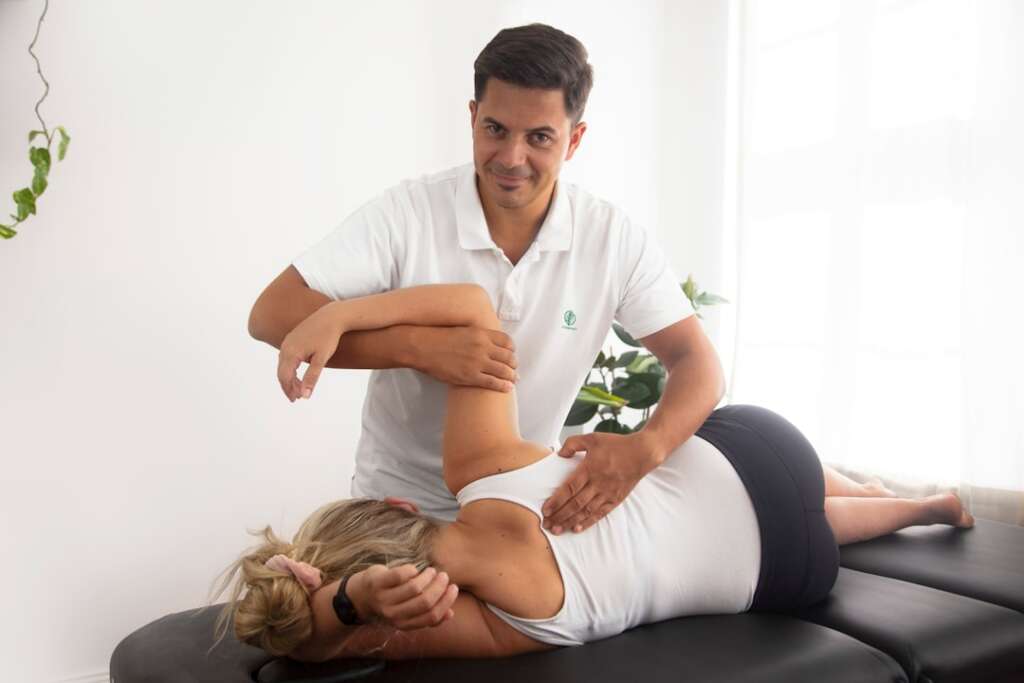
A conservative-first philosophy isn’t passive. It’s a structured, sequenced approach to spine care where each intervention is chosen deliberately before escalating to the next level. Think of it less as “waiting and hoping” and more as systematically eliminating what’s reversible before committing to what’s permanent.
Clinical guidelines from the American College of Physicians and the North American Spine Society place nonspecific low back pain squarely in the domain of conservative therapy first including education, activity modification, anti-inflammatory medications, and spinal manipulation before any imaging-driven surgical referral is made. The framework for Atlanta patients should look like this:
Step 1: Accurate Diagnosis First
Conservative treatment only works when it’s matched to the right diagnosis. An MRI finding, even a visually striking one, doesn’t automatically dictate surgery. Severe degenerative changes on imaging are common in people over 40 who have no pain at all. The job of a conservative-first specialist is to correlate what the imaging shows with what you actually feel and how your function is limited. That correlation drives everything downstream.
Step 2: Structured Physical Therapy
Research from the SPORT study found that receiving physical therapy within the first six weeks was associated with better patient self-rating of improvement, greater improvement in physical functioning, and a reduced likelihood of needing surgery across a 1-year follow-up period. A high-quality PT program is not generic stretching. It should include core stabilization, functional movement retraining, posture correction, and a home exercise plan you can sustain independently. The goal is to build a stronger, more resilient spine not just to manage today’s pain.
Step 3: Targeted Injections When Appropriate
Epidural steroid injections, facet joint injections, and nerve blocks can provide meaningful relief — and critically, they can give you a window of reduced pain in which physical therapy can actually be effective. They’re tools in the toolbox, not endpoints. A conservative-first specialist uses them strategically, not as a default or as a delay tactic before surgery.
Step 4: Activity Modification and Lifestyle Integration
Sleep position, workstation setup, movement patterns, weight management, and even stress reduction all have documented effects on chronic back pain. These aren’t soft recommendations — they’re evidence-based components of a comprehensive plan. A back specialist who doesn’t ask about your daily life, your job, your activity level, and your goals isn’t giving you the full picture.
Step 5: Surgery: When Truly Indicated
Surgery has a legitimate, important role in spine care. When nerve compression is causing progressive weakness, when bowel or bladder function is threatened, or when a properly executed conservative program has genuinely failed over an appropriate timeline — surgery may be the right answer. But “right answer” is different from “first answer.” A conservative-first specialist earns the trust of their surgical recommendation precisely because they’ve already exhausted the alternatives with you.
Red Flags: How to Spot a Surgery-First Practice
Not every practice that claims to treat back pain conservatively actually does. Here are the concrete warning signs that a provider is pushing toward surgery prematurely and what you should see instead.
| Red Flag in a Surgery-First Practice | What a Conservative-First Practice Does Instead |
|---|---|
| Surgery is discussed at or before your first appointment, without a full functional history | First visit focuses on thorough evaluation: history, physical exam, functional goals, and lifestyle factors |
| Imaging (MRI/X-ray) is ordered immediately and used to justify a surgical recommendation without conservative trial | Imaging is correlated with symptoms; structural findings alone do not trigger surgical discussion |
| No formal physical therapy is prescribed or recommended before surgical consultation | Structured PT — at minimum 6–12 weeks — is initiated before any surgical conversation |
| The provider cannot clearly explain what conservative options have been tried and why they failed | Each escalation is documented and explained: what was tried, for how long, and what the outcome was |
| Second opinions are discouraged or treated as a problem | Second opinions are welcomed and often encouraged for any surgical recommendation |
| The practice’s primary revenue model is procedural (surgeries and interventional injections), with little PT infrastructure | Multidisciplinary team includes physical therapists, pain management, and non-surgical providers |
| Recovery timelines and surgical risks are minimized or glossed over | Honest, specific expectations are set: realistic recovery windows, complication risks, and “what if it doesn’t work” scenarios |
One question you can ask any provider at your first visit: “What is your practice’s average time from first appointment to surgery for a patient with my diagnosis?” The answer — and how they react to the question — tells you a great deal about their philosophy.
Common Back Conditions We Treat: Herniated Discs, Stenosis, and Beyond
Understanding your diagnosis is the foundation of informed decision-making. These are the conditions we most commonly evaluate and treat at Barbour Orthopaedics & Spine and what a conservative-first approach to each one actually looks like.
Herniated Disc
A herniated disc occurs when the soft inner gel of a spinal disc pushes through its outer casing and presses against a nearby nerve root. It can cause radiating pain, numbness, or weakness in the legs (lumbar herniation) or arms (cervical herniation). It’s one of the most over-operated diagnoses in spine care.
The research is striking: a systematic review and meta-analysis of over 2,200 non-surgically treated patients with symptomatic lumbar disc herniation found a pooled regression rate of 63% — meaning nearly two out of three herniated discs showed measurable improvement or resolution without surgery. The clinical implication is direct: if you’ve been diagnosed with a herniated disc, a properly structured conservative program should be your starting point in almost every case, with very few exceptions.
Those exceptions include progressive neurological weakness, loss of bowel or bladder control (cauda equina syndrome, a true emergency), or failure of a genuine 6–12 week conservative trial. Surgery is the right call in those specific scenarios — not before them.
Spinal Stenosis
Spinal stenosis is a narrowing of the spinal canal, most commonly in the lumbar spine, that compresses nerves and causes pain, cramping, or weakness — often worsening with walking or prolonged standing and improving with sitting or bending forward. It’s strongly associated with aging and affects a significant portion of adults over 60.
The World Federation of Neurosurgical Societies Spine Committee agreed that a conservative approach based on therapeutic exercise should be the first choice in patients with lumbar spinal stenosis, except in cases with significant neurological deficits. Severity on imaging does not automatically mandate surgery — many patients with significant stenosis on MRI remain functional with structured physical therapy and pain management. The key distinction is whether your neurological function is stable or deteriorating.
Degenerative Disc Disease
Degenerative disc disease (DDD) is perhaps the most over-alarming diagnosis in spine care. Its name implies a progressive, irreversible deterioration but the reality is more nuanced. Some degree of disc degeneration is a normal part of aging after 40. The question isn’t whether your discs show degeneration on MRI; the question is whether that degeneration is the actual source of your specific pain pattern.
Randomized controlled trials have demonstrated that cognitive intervention combined with structured exercise produces statistically similar improvements in disability scores compared to spinal fusion surgery for chronic low back pain — including pain driven by degenerative disc disease. That finding should fundamentally reshape the conversation about when fusion is appropriate. For most DDD patients, a well-designed conservative program — combined with realistic education about what the diagnosis actually means — is both the safest and most effective starting point.
Sciatica and Radiculopathy
Sciatica, that sharp, electric pain that travels from the lower back through the buttock and down the leg is a symptom, not a diagnosis. It results from nerve irritation or compression, most often from a herniated disc or stenosis. The vast majority of sciatica cases resolve with conservative treatment. Physical therapy, anti-inflammatory management, and targeted epidural injections provide relief for most patients without surgery.
Spondylolisthesis and Facet Joint Disease
Spondylolisthesis (a forward slipping of one vertebra over another) and facet joint arthritis are common pain generators in adults over 40, particularly those with years of physical labor or repetitive spinal loading. Both conditions respond well to conservative care in most cases: core strengthening, activity modification, and targeted injections can dramatically reduce pain and improve function without structural surgery.
If you’re experiencing any of these symptoms and aren’t sure where to start, our team at Barbour Orthopaedics & Spine can help you understand your diagnosis clearly and build a structured, conservative-first plan tailored to your specific condition and goals.
What Your First Visit Should Include (And What It Shouldn’t)

A great first appointment with a back specialist should leave you with three things: a clear understanding of your diagnosis, a structured treatment plan starting with conservative options, and an honest conversation about what escalation might look like — and when. Here’s what that visit should and shouldn’t contain.
What Should Happen
A thorough health and functional history. Your specialist should ask not just about your pain, but about your daily life: What activities have you given up? What’s your work like? What have you already tried? Your full story — medications, prior imaging, previous treatments, family history — is one of the most important diagnostic inputs your doctor has. Don’t let the appointment rush past it.
A hands-on physical examination. This means evaluating your posture, range of motion, gait, neurological reflexes, and strength. The physical exam is how a specialist correlates imaging findings with your actual functional state. A provider who skips straight to the MRI is skipping the most important step.
An imaging review tied to your symptoms. If you have prior imaging, it should be reviewed in the context of your history — not used in isolation to justify a treatment recommendation. New imaging should be ordered only when it will change the clinical decision.
A conservative treatment plan as the starting point. Unless you present with a true surgical emergency (progressive neurological loss, cauda equina symptoms, spinal instability after trauma), your first treatment recommendation should involve physical therapy, activity modification, and/or appropriate pain management — not a surgical referral date.
Honest answers to your questions. A good specialist welcomes questions about their approach, their outcomes, and what happens if this treatment doesn’t work. You’re making decisions that affect the rest of your life. Ask everything.
What Shouldn’t Happen
A surgical recommendation at the first visit, without a prior conservative trial is a significant warning sign in almost all non-emergency cases. Similarly, a provider who dismisses your concerns about surgery, frames it as the only “real” solution, or cannot explain a conservative treatment rationale in plain language is not aligned with evidence-based spine care. You are not obligated to stay with a provider whose philosophy doesn’t match your needs. Getting a second opinion is always appropriate before any spine surgery.
Why Barbour Orthopaedics & Spine Is Atlanta’s Conservative-First Back Specialist
At Barbour Orthopaedics & Spine, our approach to back pain is built on a foundational belief: surgery is never our first recommendation. It is a carefully considered option when conservative care has been genuinely exhausted and the clinical evidence supports it. For the overwhelming majority of patients we see, including those with herniated discs, stenosis, degenerative disc disease, and chronic low back pain, meaningful relief is achievable without going to the operating room.
Here’s what that means in practice for Atlanta, Georgia patients who come to us:
- Every evaluation starts with your story. We spend time understanding not just your imaging, but your life, your work, your activity goals, what you’ve already tried, and what “better” actually means to you.
- We match your treatment to your diagnosis, not a template. A herniated disc at 45 in an active person who wants to return to running looks different from the same diagnosis in a 65-year-old managing comorbidities. The plan reflects that.
- We coordinate care across disciplines. Physical therapy, pain management, and surgical consultation are all available within our practice network so your care doesn’t fall through the cracks between providers.
- We set honest expectations. Recovery isn’t linear. You’ll have good days and harder days, and we’ll prepare you for both. We tell you what the realistic outcomes of each approach look like — including surgery when it’s warranted so the decision is genuinely yours.
- We welcome second opinions. If you’ve been told surgery is your only option somewhere else in the Atlanta, Georgia metro area, we’ll give you a full independent evaluation. You may have more options than you’ve been told.
Our conservative-first philosophy isn’t a marketing position. It’s what the evidence supports — and it’s what patients who’ve been through our care consistently tell us made the difference. We treat the full spectrum of spine and orthopedic conditions, and when surgery truly is the right call, we perform it with the same precision and care we bring to every non-surgical intervention.
Frequently Asked Questions About Choosing a Back Specialist
We’ve answered the most common questions we hear from patients who are weighing their options and trying to find the right back specialist for their specific situation.
Contact Barbour Orthopaedics & Spine Today for Your Comprehensive Back Evaluation
You’ve been managing this long enough. If you’re living with chronic back pain and want an honest, thorough evaluation from a team that will exhaust every appropriate conservative option before any surgical conversation — we’re ready when you are.
Contact Barbour Orthopaedics & Spine today to schedule your comprehensive spine evaluation. Same-day appointments are available. Our team will review your history, your imaging, and your goals — and build a conservative-first treatment plan designed around your specific diagnosis and your life. Call (404) 480-9330 or use our online scheduling tool to book your first visit. No pressure, no rushed decisions, just a clear plan and a team who’s on your side.
Frequently Asked Questions
How do I know if I need a back specialist or a general orthopedist?
If your back pain has lasted more than 6 weeks, involves radiating symptoms (pain, numbness, or weakness into your legs or arms), or has not responded to basic conservative care, a spine-focused back specialist is typically the better choice. They have concentrated training in spine conditions specifically and can offer a more targeted evaluation and treatment plan than a generalist orthopedist.
What is a conservative-first approach to back pain, and how long should it last before surgery is considered?
A conservative-first approach means starting with structured, evidence-based non-surgical treatments: physical therapy, activity modification, anti-inflammatory medications, and targeted injections when appropriate. Most clinical guidelines recommend a minimum of 6 to 12 weeks of a genuine conservative program before surgery is considered and only if neurological function is stable. Emergency exceptions exist for cauda equina syndrome, rapidly progressive weakness, or spinal instability from trauma.
Can a herniated disc or spinal stenosis really get better without surgery?
Yes — for most patients. Research shows approximately 63% of symptomatic lumbar disc herniations regress or improve measurably with non-surgical treatment. For spinal stenosis, conservative care including physical therapy and injections is the recommended starting point for patients without significant neurological deficits. Surgery is effective when conservative care genuinely fails, but it is not required as a first step for the majority of patients.
What should I bring to my first appointment with a back specialist?
Bring any prior imaging you have (X-rays, MRI, CT scans with reports), a list of treatments you have already tried and their outcomes, your current medications, and a clear description of how your pain affects your daily function, not just how much it hurts, but what you can and cannot do. The more context your specialist has, the more accurate and targeted your treatment plan will be.
Follow us on our social media!
