
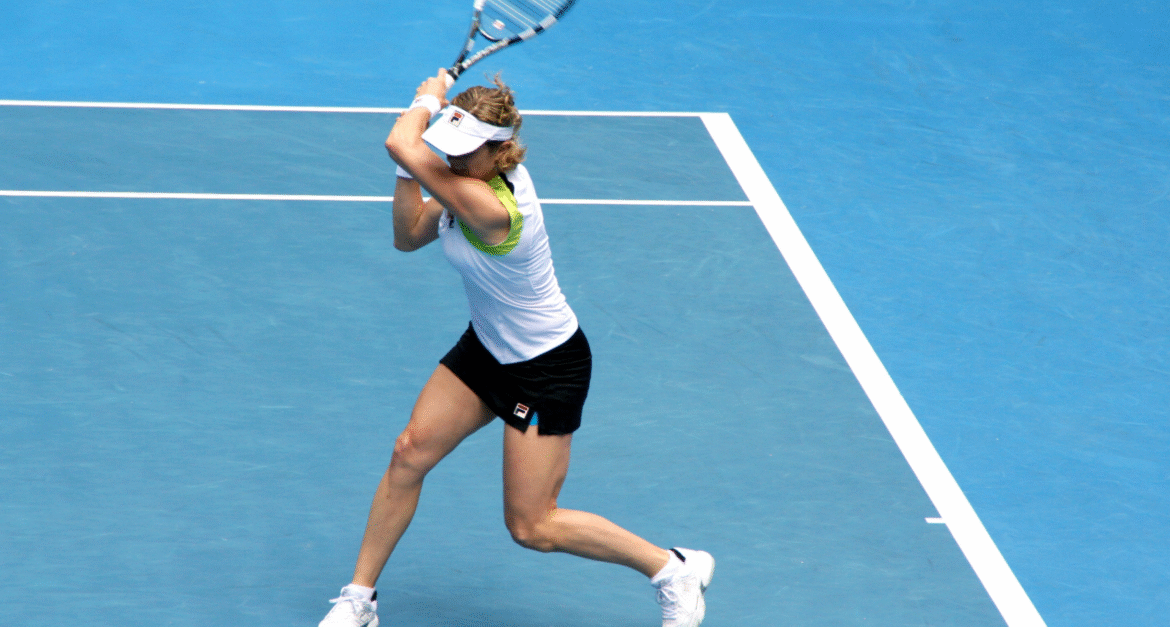
Tennis elbow affects millions of people every year, and while the name of the disease may lead you to believe otherwise, you won’t need to hit a ball to develop this sore affliction. Less than 10% of tennis elbow cases occur in people who play tennis. Here at Barbour Orthopaedics & Spine, we see people from all walks of life who are suffering from this injury. Knowing when home remedies are warranted and when a trained tennis elbow treatment from a professional is necessary can make the difference in quick recovery versus months of annoying pain.
What is Tennis Elbow?
Lateral epicondylitis, or tennis elbow, as it is popularly known, is a painful condition of the tendons where they attach to the lateral epicondyle (the lateral elbow bump). It is an overuse injury occurring when the extensor tendons of the forearm are made to undergo inflammation, degeneration, or micro-tearing from repeated stress and strain.
It develops over a course of time, generally beginning with mild pain, which continuously gets worse over a period of weeks or months. Pain originates in the elbow and can spread towards the forearm, severely impacting daily functions such as gripping objects, computer typing, or rotating a doorknob.
Golfer’s Elbow vs Tennis Elbow: Key Comparisons
Though easily confused, golfer’s elbow vs tennis elbow present specific differences essential for proper diagnosis and correction:
Tennis Elbow (Lateral Epicondylitis)
- Location: Pain on the outside (lateral) aspect of the elbow
- Common activities: Tennis backhand, typing, painting, carpentry
- Pain triggers: Wrist extension, gripping, lifting
Golfer’s Elbow (Medial Epicondylitis)
- Location: Medial aspect of the elbow (inside) pain
- Common activities: Golf swing, throwing games, rock climbing
- Pain triggers: Grasping, flexion of the wrist, closure of a fist
- Additional symptoms: Can include numbness or tingling in the fingers
Understanding these differences is essential because treatment approaches may require specific modifications based on which tendons are affected.
Common Causes and Risk Factors
Tennis elbow often occurs in people whose occupations or hobbies involve repeated motion of the arm and wrist.
Work-related factors include computer operators with extended typing, construction workers with repeated use of tools, painters with overhead work, and chefs performing stirring and chopping tasks.
Sports injuries involve racquet sports (especially those with faulty stroke mechanics), weightlifting with heavy grip, baseball hitting and pitching, and rock climbing.
Personal risk factors are age (most frequent in 30-50), past elbow injuries, sporting or occupational activity, poor technique, and insufficiency in forearm conditioning.
Recognizing Tennis Elbow Symptoms
Primary Symptoms
- Pain and soreness on the lateral aspect of the elbow
- Weak grip strength, such that one can hardly grip anything
- Morning stiffness that can resolve with mild movement
- Pain radiating along the forearm towards the wrist
- Difficulty in some movements, e.g., lifting, gripping, or twisting
Progressive Development
Symptoms normally progress through three stages as outlined below: early mild pain after activity, moderate pain on and after activity with functional limitation, and severe persistent pain with significant functional impairment.
Red Flag Symptoms
Get a professional assessment early for pain not controlled by rest, numbness or a pins-and-needles feeling in your hand, inability to hold things, noticeable swelling or change in shape, or infection.
Effective Home Treatment and Self-Care
For most patients presenting with early-stage tennis elbow, conservative home therapy can be very efficient when appropriately applied.
Rest and Activity Modification
Full rest from annoying activity is the optimal first measure. Identify and temporarily avoid pain-inducing repetitive motion, change working activity with the implementation of ergonomic devices, employ frequent breaks on repetitive tasks, and employ temporary activity restriction for 2-4 weeks.
Ice and Heat Therapy
Apply ice packs for 15-20 minutes, 3-4 times daily in acute stages, with a barrier to prevent a burn. Use heat for 15-20 minutes before activity to help alleviate chronic symptoms and promote muscle flexibility and relaxation.
Pain Management
Over-the-counter NSAIDs such as ibuprofen (400-800mg, 3 times a day with food) or twice-daily naproxen (220mg) help lessen pain and swelling. Topical NSAIDs, applied directly on the skin where it hurts, may also help.
Gentle Exercises
Stretching exercises repeated 2-3 times daily are wrist extensor stretches (extend arm, flex wrist down, hold for 30 seconds) and wrist flexor stretches (extend arm, extend wrist up, hold for 30 seconds).
Progressive reinforcement after the resolution of acute pain requires eccentric training with controlled lengthening contraction, slow-tension resistance band training with graduated tissue loads, and low-level wrist weight training.
Ergonomic Modifications
Set up computer workstations with correct monitor placement and location of keyboard, use equipment with larger grips or vibration-dampening handles, learn proper procedures for repetitive tasks, and purchase ergonomically-designed equipment.
When Home Treatment Isn’t Enough
Certain conditions absolutely require professional tennis elbow treatment from a specialist:
Time-Based Indicators
- Lasting symptoms for over 4-6 weeks despite frequent home care
- Worsening pain affecting day-to-day activity or sleep
- Recurrent attacks after initial recovery
- Progressive functional decline despite rest and modification
Functional Limitations
- Inability to fulfill job duties appropriately
- Difficulty with daily chores like opening jars or typing
- More than 20-30% loss of grip strength compared to the non-affected side
- Pain with light activities such as holding a coffee cup
Professional Tennis Elbow Treatment Options
At Barbour Orthopaedics & Spine, when you see a tennis elbow specialist, you are introduced to sophisticated diagnostic and therapeutic opportunities that are not available through home care alone.
Advanced Diagnostic Evaluation
Specialists carry out comprehensive physical examinations, including specific orthopedic tests, assess grip strength and movement, and employ sophisticated imaging, including ultrasound for real-time assessment of the tendon, MRI for clear visualisation of soft tissues, and diagnostic injection for confirmation and therapeutic effect.
Non-Surgical Specialist Treatments
Corticosteroid Injections entail proper drug administration into the affected tendon areas for rapid pain and inflammatory relief. Efficacy is up to 70-80% with a relief duration of normally 3-6 months.
Platelet-Rich Plasma (PRP) Treatment utilizes your own platelets in a high concentration to promote natural healing. It has 60-70% success rates with improvements noted in 4-8 weeks and a low likelihood of complications.
Extracorporeal Shock Wave Therapy (ESWT) works with high-energy sound waves to bring about healing in 3-4 therapy sessions with 60-80% success for chronic cases and a low incidence of undesirable effects.
Professional Physical Therapy incorporates advanced methods such as manual therapy and dry needling, progressive loading with specifically developed exercise progression, biomechanical evaluation to assess movement pattern errors, and education in correct technique and prevention of injuries.
Advanced Interventional Treatments
Percutaneous Needle Tenotomy achieves 70-85% success rates with low downtime through small needle punctures under the guidance of ultrasound, inducing a healing response.
Tenex Procedure deploys ultrasonic power to eradicate damaged tissue through a single small cut, with recovery in 6-8 weeks and without any removal of healthy tissue.
Surgical Treatment Options
If conservative therapy fails after 6-12 months, surgery may be recommended. Treatment options are open tennis elbow release with 85-95% success rates, arthroscopic release with lesser scar formation and earlier recovery, and percutaneous release for favorable individuals who require minimal recovery time.
Creating an Effective Treatment Timeline
Phase 1 (Weeks 1-4): Treatment at home with rest, ice, NSAIDs, and stretching. Professional consultation is recommended if no resolution in week 4.
Phase 2 (Weeks 4-12): Specialty evaluation with focused therapies such as injections or PRP therapy, professional physical therapy, and ergonomic evaluations.
Phase 3 (Weeks 12-24): Complex procedures such as needle tenotomy, aggressive rehab with progressive strengthening, and surgical consultation in case conservative initiatives are not adequate.
The Barbour Orthopaedics Advantage
We have specialists who provide advanced diagnostic technology, including state-of-the-art ultrasound, MRI, and diagnostic injection services. We have board-certified doctors who possess widespread experience in both surgical and conservative therapies.
Modern therapeutic methods include ultrasound-guided injections for precise drug administration, platelet-rich plasma therapy via the latest processing technologies, shock wave therapy utilizing the latest technological equipment, and minimally invasive surgery.
Our comprehensive system provides for smooth coordination of medical and rehab teams, with each plan of care tailored to specific requirements, activity capabilities, and objectives.
Making the Right Treatment Decision
Think home care if you have had symptoms for less than 4 weeks, your pain is mild to moderate with no daily activity interference, you can recognize and avoid irritating activities, and your symptoms are getting better with rest.
Consider professional tennis elbow treatment when the symptoms continue after 4-6 weeks of regular home treatment, the pain seriously affects your work or daily activity, you have recurrent attacks, or home measures are not adequately relieving your symptoms.
Take Control of Your Tennis Elbow Today
Tennis elbow need not dominate your life. A good mixture of professional skill and tried-and-true approaches to treatment allows most patients to recover completely and attain desired activity levels.
At Barbour Orthopaedics & Spine, our tennis elbow specialists provide individualized care for your particular needs and goals. From conservative therapies such as PRP therapy and shock wave therapy to advanced surgical interventions as necessary, we offer the whole spectrum of tennis elbow treatment in a single location.
Don’t miss out on things you love while tennis elbow holds you back. Our facility’s five-star-rated locations in Georgia and South Carolina provide convenient proximity to professional attention with the personalized care you deserve.
Follow us on our social media!
