
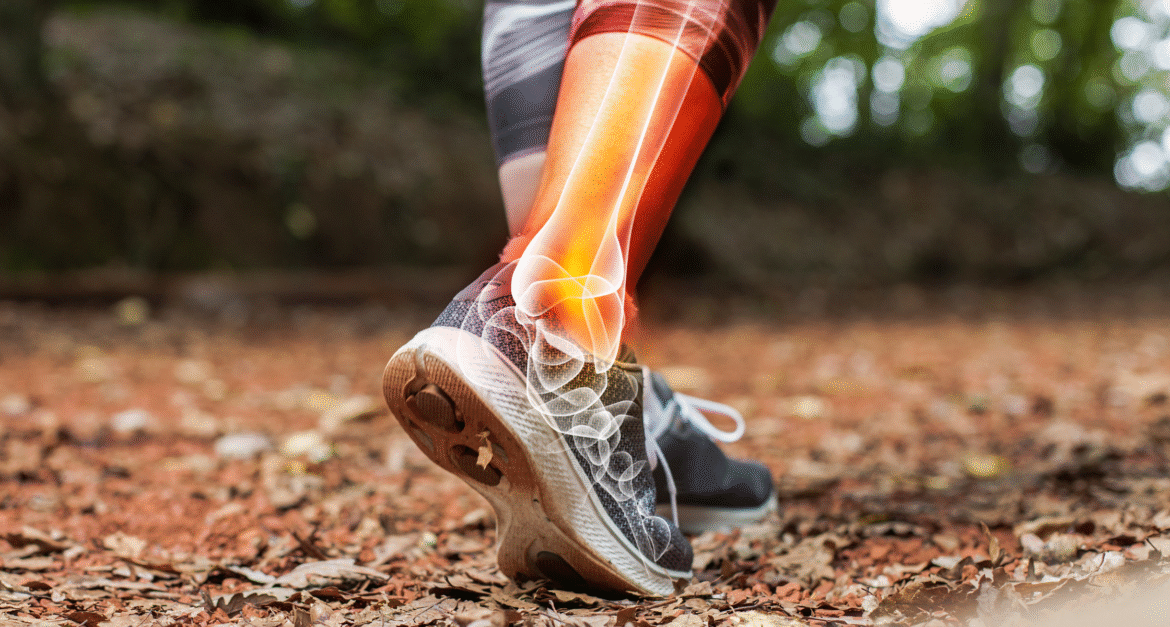
Your ankles and feet are the keystone of your mobility, supporting your entire body weight while permitting you to walk, run, jump, and perform daily functions. If injury compromises these sensitive structures, the impact on your quality of life is routinely drastic. At Barbour Orthopaedics & Spine, our skilled staff understands the sensitive nature of foot and ankle injuries. We are dedicated to helping patients recover quickly through specialized care and proven rehabilitation methods.
Understanding Foot and Ankle Anatomy
The ankle-foot complex is comprised of 26 bones, 33 joints, and over 100 muscles, tendons, and ligaments working in coordination for stability, balance, and forward movement. It is a sophisticated system with three main parts:
- Forefoot: Holds the toes and metatarsal bones
- Midfoot: Contains the five tarsal bones in the arch area
- Hindfoot: Consists of the ankle and heel bones (calcaneus and talus)
The ankle joint in itself is a hinge joint formed where the tibia, fibula, and talus bones intersect, held in place through a sophisticated system of ligaments that restrain too much movement but still enable a normal range of movement.
Most Common Foot and Ankle Injuries
Ankle Sprains
Most orthopedic injuries are ankle sprains, and they account for approximately 40% of sport-related injuries. They occur when the ligaments in the ankle joint are overstretched or fully ruptured.
Common causes include:
- Twisting or rolling the ankle while playing sports
- Landing awkwardly after a jump
- Walking or running on uneven ground
- Wearing inappropriate footwear
Symptoms typically include:
- Pain and swelling around the ankle
- Swelling and bruising
- Limited range of motion
- Unsteadiness or feeling the ankle “gives way”
Achilles Tendon Injuries
The Achilles tendon connects the calf muscles to your heel bone and is the body’s thickest tendon, yet also the most vulnerable to tears, especially in people who are very active over the age of 30.
Types of Achilles tendon injuries:
- Achilles tendinitis: Tendon inflammation resulting from overuse
- Achilles tendon rupture: Tendon’s partial or complete rupture
Risk factors include:
- Abrupt training intensity increases
- Tight calf muscles
- Age-related tendon degeneration
- Some medicines (fluoroquinolone antibiotics)
Plantar Fasciitis
Plantar fasciitis is a common condition of the thick band of tissue (plantar fascia) on the sole from the heel bone to the toes. It is a very common problem in runners and individuals who are on their feet for many hours each day.
Characteristic symptoms:
- Deep, stabbing pain in the heel, especially on first steps in the morning
- Pain that worsens with movement but goes away with rest
- Heel tenderness and stiffness
Stress Fractures
Stress fractures of the ankle and foot are the result of repetitive stress and overuse, a frequent finding in military recruits and athletes. Minute cracks in the bone most commonly occur in the metatarsals, navicular, and calcaneus bones.
Warning signs include:
- Progressive onset of pain with activity
- Localized swelling and tenderness
- Pain that worsens with weight-bearing activity
Jones Fractures
A Jones fracture is a specific type of fracture of the foot at the base of the fifth metatarsal. Such fractures are famously known for slow healing due to a lack of blood supply in the area.
Common causes:
- Landing on the outside of the foot
- Twisting injuries during sports
- Direct blow to the foot
Professional Treatment Approaches
At Barbour Orthopaedics & Spine, we offer a holistic approach towards treating both short-term pain relief and lasting functional recovery. We provide:
Advanced Diagnostic Imaging
Precise diagnosis is key to proper therapy. We have state-of-the-art facilities for:
- Digital X-rays for bone fractures and alignment evaluation
- MRI soft tissue evaluation imaging
- Real-time tendon and ligament ultrasound evaluation
- CT scans for advanced fracture evaluation
Non-Surgical Treatment Options
Numerous ankle and foot injuries are well-tolerated to conservative approaches to therapy:
Immobilization and Protection
- Custom splinting and bracing
- Controlled weight-bearing walking boots
- Protective taping techniques
Injection Therapies
- Steroid injections to reduce inflammation
- Platelet-rich plasma (PRP) therapy for enhanced healing
- Hyaluronic acid injections for joint lubrication
Physical Therapy Integration Our physical medicine and rehabilitation doctors collaborate with patients to establish customized recovery plans emphasizing:
- Pain relief and anti-inflammatory properties
- Range of motion restoration
- Strength development and muscle re-training
- Balance and proprioception training
Advanced Surgical Solutions
If conservative treatment is not sufficient, our board-certified orthopedic experts are specialists in minimally invasive surgery:
Arthroscopic Procedures
- Ankle arthroscopy for joint cleaning and repair
- Minimally invasive ligament reconstruction
- Tendon repair and debridement
Traditional Surgical Interventions
- Open reduction and internal fixation (ORIF) for complex fractures
- Tendon transfers and reconstructions
- Joint fusion procedures for advanced arthritis
Evidence-Based Rehabilitation Techniques
Phase-Based Recovery Protocol
Phase 1: Acute Phase (0-2 weeks)
- Primary aims: Alleviate pain and inflammatory reactions, maintain damaged tissues
- Methods: R.I.C.E. protocol (Rest, Ice, Compression, Elevation), gentle range-of-motion exercises
- Professional interventions: Immobilization, anti-inflammatory medication, therapeutic modalities
Phase 2: Subacute Phase (2-6 weeks)
- Key goals: Regain pain-free movement, begin to build strength
- Techniques: Progressive stretching, isometric exercises, balance training
- Professional interventions: Manual therapy, progressed exercise guidance, weight-bearing progression
Phase 3: Recovery Phase (6-12 weeks)
- Key goals: Return to normal strength and function, prevent re-injury
- Techniques: Dynamic strengthening, sport-specific training, plyometric training
- Professional interventions: Advanced protocols for rehabilitation, movement analysis, and return-to-activity testing
Innovative Rehabilitation Modalities
Aquatic Therapy Water exercises have a plethora of advantages:
- Reduced weight-bearing stress on healing tissues
- Edema reduction through hydrostatic pressure
- Resistance training in a controlled environment
Balance and Proprioception Training. Special equipment and techniques help in rebalancing:
- Joint position awareness
- Dynamic balance responses
- Neuromuscular control patterns
Gait Analysis and Correction Modern technology allows our staff to:
- Identify abnormal walking patterns
- Alleviate biomechanical deficiencies
- Optimize movement efficiency
Prevention Strategies for Long-Term Foot Health
Proper Footwear Selection
Selecting the correct shoes is key to preventing injuries:
- Wear comfortable shoes with good cushioning
- Choose sport-specific shoes for athletic events
- Replace worn footwear regularly
- Use custom orthotics for structural defects
Training Modifications
Progressive Loading
- Gradually increase activity intensity and duration
- Allow sufficient recovery time between training sessions
- Cross-train to reduce repetitive stress on specific structures
Strength and Flexibility Maintenance
- Periodic calf stretching to reduce Achilles issues
- Strengthening foot and ankle muscles
- Strengthening core stability for increased overall biomechanics
Environmental Awareness
- Assess walking and exercising areas for hazards
- Use sufficient lighting in poorly lit places
- Maintain situational awareness throughout activities
When to Seek Professional Care
While mild foot and ankle pain can resolve with rest and home care, some signs might indicate immediate professional consultation:
- Severe pain restricting weight-bearing
- Visible deformity or instability
- Numbness or tingling sensations
- Signs of infection (fever, increased warmth, red streaking)
- Persistent symptoms lasting for a week or more
The Barbour Orthopaedics Advantage
At Barbour Orthopaedics & Spine, we believe in delivering superior care that extends beyond symptom treatment. We offer comprehensive care, including:
- Expert Diagnosis: Advanced imaging and clinical expertise for precise assessment
- Personalized Treatment Plans: Tailored plans as per specific needs and goals
- Advanced Technology: Current surgery and recovery facilities
- Collaborative Care: Seamless transitions between our surgical and rehab teams
- Patient Teaching: Comprehensive training for prevention and self-management
Throughout South Carolina and Georgia, our locations are five-star rated and provide convenient access to first-class orthopedic attention. Whether for a routine consultation or a sophisticated surgery procedure, our team of experts is ready to help you achieve your finest foot and ankle well-being.
Take the Next Steps for Recovery
Ankle and foot injuries do not have to limit your active lifestyle. Timely diagnosis, correct care, and therapy allow the majority of patients to recover and enjoy a desired activity level and long-term joint health.
If you have ankle or foot pain, do not wait for your symptoms to persist. Contact Barbour Orthopaedics & Spine today to set up a consultation with one of our board-certified orthopedic physicians. We are ready to develop a tailored plan of care to get you back to doing what you love.
Follow us on our social media!
