

If reaching overhead, sleeping on your shoulder, or lifting your arm past shoulder height has become a daily struggle, you already know how much a rotator cuff tear affects your life. The question most patients arrive at fairly quickly: do I really need surgery? turns out to be more nuanced than a simple yes or no. The honest answer is: it depends on the type and size of your tear, how long you’ve had it, and what your functional goals are.
At Barbour Orthopaedics & Spine, we believe surgery is never the first recommendation. Most shoulder conditions, including many rotator cuff tears, respond well to properly managed conservative care. But we also know that delaying the right intervention when surgery truly is needed can limit your options down the road. This guide walks you through the evidence so you can have a more informed conversation with your orthopedic surgeon.
When Surgery Is — and Isn’t — the Right Answer for Your Rotator Cuff Tear
Surgery is not automatically necessary for a rotator cuff tear. For most patients, particularly those with degenerative (age-related) tears that came on gradually, structured physical therapy is the appropriate first step, and it succeeds far more often than most people expect. Surgery becomes necessary when specific clinical criteria are met: when conservative treatment fails after an adequate trial, when the tear is large or traumatic, or when structural factors like significant muscle degeneration are present.
The old assumption that a rotator cuff tear automatically equals surgery is being challenged by a growing body of research. A landmark study showed that 75% of patients who followed a prescribed physical therapy regimen for their tears improved sufficiently to avoid surgery over a two-year period — leading researchers to rethink how we identify candidates for non-operative management. At the same time, tears tend to get larger with time, and delaying surgery in patients who truly need it can result in progression of a partial tear to a full tear, fatty infiltration of the damaged tendon and muscle, and muscle atrophy and weakness.
The key is identifying which category you fall into and that’s exactly what a thorough orthopedic evaluation is designed to determine.
Understanding Your Tear: Partial vs. Full-Thickness (and Why It Matters)
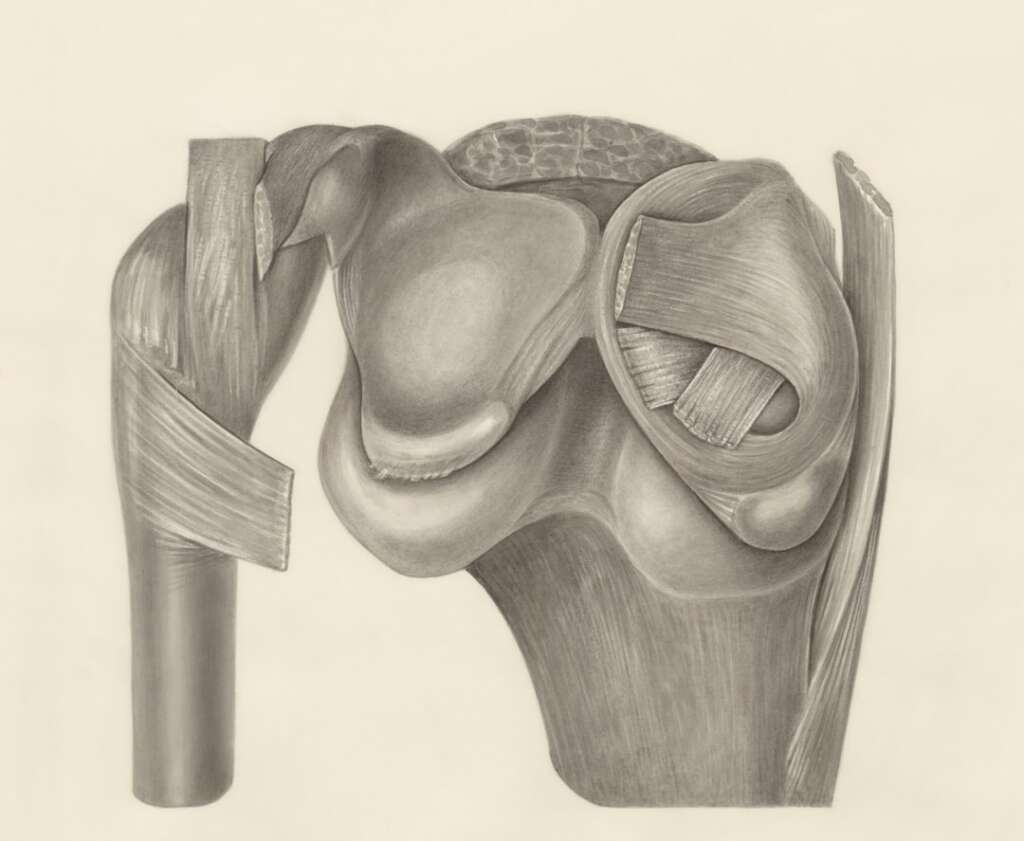
Your tear type is one of the single most important variables in the surgery-vs.-PT decision. Partial tears involve damage to part of the tendon thickness, while full-thickness tears mean the tendon has torn completely through. Both can be painful, but they carry very different prognoses with conservative treatment.
Partial-Thickness Tears
Partial tears are graded by how much of the tendon thickness is involved. Tears involving less than 50% of the tendon thickness are generally excellent candidates for conservative management. Patients with atraumatic partial-thickness tears involving less than 50% of the tendon thickness, particularly on the non-dominant extremity, are more likely to be successfully treated without surgery. Conservative treatment is reasonable for most partial-thickness tears.
When a partial tear involves more than 50% of the tendon thickness, the calculation changes. These tears are more likely to progress to full-thickness tears and often benefit from earlier surgical consideration — though a structured PT trial is still typically recommended first. Research has shown that delayed surgical repair following a course of conservative treatment in partial-thickness tears did not yield worse results compared to immediate arthroscopic repair, and those who underwent six months of conservative treatment prior to repair actually showed improved functional results six months post-operatively.
Full-Thickness Tears
A full-thickness tear means the tendon is completely torn away from its attachment to the bone. These are further classified by size — small (<1 cm), medium (1–3 cm), large (3–5 cm), and massive (>5 cm or involving two or more tendons). Size matters enormously for both treatment selection and outcomes. The choice between surgical and non-surgical management is influenced by tear size and location, the patient’s age, activity level, and comorbidities.
The Role of Fatty Infiltration
Beyond tear size, your MRI report may mention “fatty infiltration”, a term describing muscle degeneration that occurs when the tendon has been torn for an extended period. This matters because fatty infiltration has a significant impact on the outcomes of rotator cuff repair, even in the setting of successful healing. Understanding this process is critical to ensure treatment before irreversible, pathological changes compromise clinical outcomes. Fatty infiltration represents the irreversible progression of muscle degeneration, and animal models have demonstrated that it begins shortly after injury and progressively worsens over time if not treated.
When significant fatty infiltration is present on MRI, surgery becomes both more urgent and less predictable in its outcomes. This is one reason why early evaluation, not watchful waiting is important when you first experience rotator cuff symptoms.
Physical Therapy for Rotator Cuff Tears: What the Research Shows
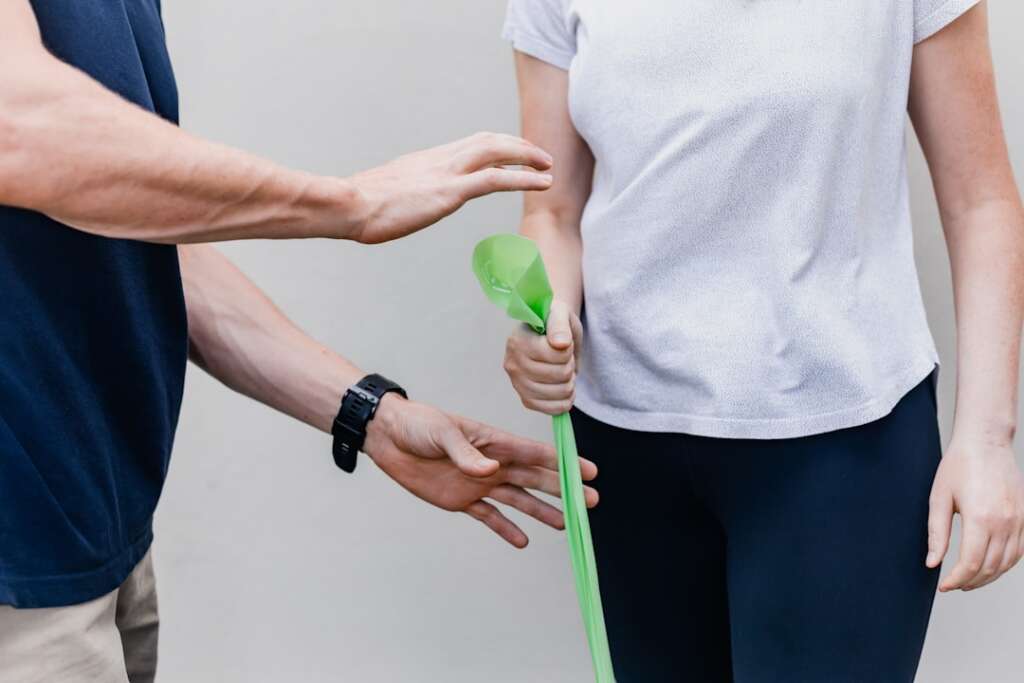
Physical therapy is not a consolation prize when surgery isn’t covered. It’s an evidence-based, first-line treatment that produces lasting improvements in pain, function, and shoulder strength for a large majority of patients. The research is clearer than ever: a structured PT program deserves a genuine trial before any surgical conversation begins.
According to reports in the literature, conservative treatment is effective in 73–80% of patients. The landmark MOON Shoulder Group study went even further: physical therapy was successful in more than 70% of patients with symptomatic, atraumatic full-thickness rotator cuff tears at a 10-year follow-up, and outcome measures improved with physical therapy and did not decline over the entire 10-year period.
Perhaps most importantly, a 2024 narrative review published in Cureus, which analyzed a decade of evidence, concluded that exercise interventions can be comparable in effectiveness to surgical treatment for improving quality of life, reducing disability, and managing pain — particularly for small and medium-sized tears.
What a Structured PT Program Actually Involves
Not all physical therapy is equal. “Doing some shoulder exercises” is not the same as a criterion-based rehabilitation program. An effective rotator cuff PT protocol typically progresses through three phases:
Phase 1 (Weeks 1–4): Pain Control and Scapular Stability. The early focus is on reducing inflammation, restoring pain-free range of motion, and reestablishing proper scapular mechanics, the foundation on which all shoulder movement depends.
Phase 2 (Weeks 4–8): Rotator Cuff Strengthening. A 2024 JOSPT systematic review found that progressive resistance training performed two to three times per week produced the most consistent improvements in pain and disability scores. Exercises progress from internal and external rotation with light resistance bands to more challenging positions as tolerance improves.
Phase 3 (Weeks 8–12+): Functional Integration. Strength gains are translated into the movements that matter for your daily life, work, or sport. This phase also includes reassessment — if meaningful progress hasn’t occurred by 12 weeks, surgical consultation should be seriously considered.
The mindset you bring to PT matters too. Low patient expectations regarding the efficacy of physical therapy were found to be a predictor of early surgery in the MOON study — meaning patients who committed to the process and believed in it tended to do better.
When Conservative Treatment Works Best: Success Rates and Patient Profiles
Research indicates that certain characteristics predict better outcomes with conservative treatment. Patients with partial-thickness tears, shorter symptom duration, minimal fatty infiltration of the rotator cuff muscles, and strong commitment to their exercise programs typically achieve the best results without surgery. The table below summarizes who tends to do well with PT versus who is more likely to need surgery.
| Patient/Tear Profile | Conservative PT Likely Sufficient | Surgery More Likely Needed |
|---|---|---|
| Tear Type | Partial-thickness; small full-thickness (<1 cm) | Large (>3 cm) or massive full-thickness tear |
| Tear Cause | Degenerative / gradual onset (atraumatic) | Acute traumatic tear (e.g., fall, car accident) |
| Symptom Duration | Short duration; recent onset | Chronic, long-standing tear |
| MRI Findings | Minimal or no fatty infiltration; low-grade muscle atrophy | Significant fatty infiltration; advanced muscle atrophy |
| Age | Adults 50+; lower activity demands | Active adults under 55 with traumatic tears |
| Functional Goals | Return to daily activities; light-to-moderate recreational activity | Return to overhead sport, manual labor, competitive athletics |
| Response to PT | Meaningful pain and strength improvement within 6–12 weeks | No meaningful improvement after 3+ months of structured PT |
| Dominance | Non-dominant arm tear | Dominant arm tear with significant functional loss |
It’s worth noting that age alone shouldn’t drive this decision. Older patients over 65 with chronic, full-thickness tears and associated muscle atrophy and fatty infiltration typically respond better to an initial course of exercise rehabilitation, while younger patients with acute tears greater than 1 cm will likely respond well to operative intervention.
Surgery for Rotator Cuff Tears: Indications, Procedures, and Outcomes

Surgery is the right answer in a specific set of circumstances and when those criteria are met, it delivers excellent results. The goal of rotator cuff surgery is to reattach the torn tendon to the bone, restoring the mechanical integrity of the shoulder joint. Understanding what surgery involves helps take away some of the understandable anxiety around this decision.
Clear Indications for Surgical Repair
Large tears greater than 3 centimeters, acute traumatic tears in young athletes, tears with significant fatty infiltration on MRI, and tears that fail to improve after 12 weeks of structured physical therapy all warrant serious surgical consideration. Surgery is also recommended for full-thickness tears or partial tears that do not improve after an adequate course of physical therapy.
Arthroscopic vs. Open Repair
Most procedures today use arthroscopic techniques with smaller incisions, resulting in less pain and faster initial recovery compared to open surgery. The choice between techniques depends on tear size, location, and tissue quality. Arthroscopy — meaning a tiny camera and instruments are inserted through small incisions — allows your surgeon to visualize the shoulder joint directly, remove damaged tissue, and anchor the torn tendon back to the bone without the larger incision and muscle disruption of open surgery.
Most rotator cuff repairs take 1–2 hours depending on tear size and complexity, are typically performed arthroscopically using small incisions and a camera, and are outpatient procedures — meaning you go home the same day.
What Outcomes Can You Expect?
Success rates are high. Over 95% for small tears and more than 70% even for two-tendon tears, with grafting techniques available for more complex cases. However, surgical success depends heavily on tissue quality at the time of repair. Studies show that structural failure rates (meaning the repair doesn’t fully heal) vary widely, ranging from 13% to 94%, depending on patient factors and surgical technique. This wide range reflects the difference between a clean, acute tear in healthy tissue and a chronic massive tear with significant degeneration.
For traumatic tears specifically, timing matters. Patients with massive rotator cuff tears caused by high- or low-energy trauma have better results with surgery, and if you can address a traumatic tear quickly, the muscle has not yet atrophied and the tendon has not lost its elasticity, even if it is massive, it can be a more straightforward repair.
Recovery Timelines Compared: PT-Only vs. Surgical Repair
One of the most common questions patients have is: how long will this take? Recovery timelines differ significantly between the two paths, and understanding what to expect helps you plan realistically, especially if you’re managing work, family responsibilities, or an upcoming season.
Physical Therapy Only: Timeline
Most patients beginning a structured PT program for a rotator cuff tear start noticing meaningful improvement within 4–6 weeks. In a multicenter study, patient-reported outcomes improved significantly at 6 and 12 weeks, with fewer than 25% of patients ultimately electing to undergo surgery. Those who decided to have surgery generally did so between 6 and 12 weeks, few required it after 3 months.
For most patients on the conservative path, significant functional restoration takes place over a 3–6 month window, and the long-term picture is encouraging: for patients who did not undergo surgery, patient-reported outcome measures did not decline over the 10-year follow-up period. You can maintain your results long-term with a home exercise program.
After Surgery: Timeline
Surgical recovery requires more patience upfront. In the first four to six weeks, the arm is typically kept in a sling with only gentle, passive movements. Between weeks six and twelve, patients transition to active-assisted and then active range of motion. Strengthening exercises typically begin after 12 weeks, starting light and progressing as the shoulder gets stronger.
Minor tears typically allow a return to most daily activities in about four to six months, while large or massive tears often require nine to twelve months for full recovery. For return to work: desk jobs with no lifting may be possible within 1–2 weeks post-surgery, while jobs requiring overhead work, repetitive arm use, or lifting typically need 3–6 months before full-duty return.
The important caveat: surgical recovery timelines are not linear. All patients who underwent arthroscopic rotator cuff repair demonstrated significant incremental improvements in pain, function, and motion at 3-, 6-, and 12-month time points, with the plateau of maximum recovery occurring at approximately 1 year with high satisfaction.
The Decision Tree: 6 Questions to Ask Your Orthopedic Surgeon
Choosing between conservative treatment and surgery depends on a combination of structural factors, personal factors, and goals. These six questions cut through the noise and focus on what actually matters in making this decision. Bring them to your next appointment.
1. What type and size is my tear, and does it affect my surgical urgency?
Tear size is the single most important structural variable. Small partial tears warrant conservative management first. Large or massive full-thickness tears, especially traumatic ones, often benefit from earlier surgical consideration before the tissue quality deteriorates further.
2. Is there fatty infiltration or significant muscle atrophy on my MRI?
If your MRI shows significant fatty infiltration, this is an argument for not waiting too long. Fatty infiltration of the infraspinatus was found to be an independent prognostic factor for poor structural healing after repair, meaning the window of opportunity for a successful surgical outcome may be narrowing. If fatty infiltration is minimal, you have more flexibility to trial PT.
3. Was this a traumatic injury or did it develop gradually over time?
A tear caused by a fall, a car accident, or a sudden forceful movement (traumatic) behaves differently than a degenerative tear that developed over years of wear and use. Traumatic tears in otherwise healthy tissue are often better candidates for early surgical repair. Degenerative tears in older adults — where the surrounding tissue quality may already be compromised — often respond well to PT first.
4. What are my functional goals — and are they realistic for each path?
Wanting to get through daily activities, sleep without pain, and stay active is a very different goal than returning to competitive overhead tennis or construction work. Be honest with your surgeon about what “better” means to you. Conservative treatment can restore excellent function for daily life. Demanding occupational or athletic requirements may tip the balance toward surgery.
5. Have I completed a structured — not casual — PT program?
A few weeks of home stretches is not the same as a criterion-based physical therapy program guided by a skilled PT. Before any surgical decision, you should have completed at least 6–12 weeks of dedicated, progressive PT with clear documentation of your progress — or lack thereof. Most patients will still initially undergo a trial of physical therapy to see if surgery can be avoided, but for those who do not respond, initiating surgery sooner rather than later is important.
6. What is my overall health — and what are the real surgical risks for me specifically?
Factors like diabetes, smoking, obesity, and certain medications can increase surgical complication rates and impair tendon healing. While most patients recover well from rotator cuff repair surgery, complications such as infection, stiffness, or re-tears can occur. Your surgeon should discuss your individual risk profile honestly, not generically.
What Happens If You Do Nothing? The Natural History of Untreated Tears
Watchful waiting — neither starting PT nor pursuing surgery — is generally not a sound strategy for a symptomatic rotator cuff tear. The research on the natural history of untreated tears is consistent: they tend to get larger, the muscle tends to weaken, and treatment options may narrow over time.
The natural history of rotator cuff tears often involves progressive pain development, tear enlargement, and advancing muscle fatty degeneration. How quickly does this happen? Tear progression or enlargement was seen in 49% of shoulders with a median time to enlargement of 2.8 years, and full-thickness tears were 1.5 to 4 times more likely to enlarge compared to partial tears.
Longer-term data confirms this trend. In a prospective study of adults 65 and younger followed for a median of 7.1 years, tear enlargement occurred in 60% of shoulders — and full-thickness tears were at significantly greater risk for enlargement.
What does enlargement mean practically? Partial-thickness tears progress less often and at a slower rate than full-thickness tears, with symptomatic and asymptomatic full-thickness tears progressing at a rate of approximately 50% at 2 to 3 years. A tear that was surgically repairable today may require a more complex — and less predictable — procedure in two years if left unaddressed.
The takeaway: even if you choose conservative treatment and it succeeds, ongoing monitoring with periodic imaging is appropriate for larger or higher-risk tears. And if you’re “waiting to see how it goes” without any active treatment, that approach carries real costs to your shoulder’s long-term health.
Ready to Build Your Treatment Plan? Let’s Talk Through Your Options.
If a rotator cuff tear is affecting your sleep, your work, your ability to exercise, or simply your ability to reach a shelf — you deserve a clear diagnosis and an honest assessment of your options, not a generic recommendation in either direction. Many patients assume that walking into an orthopedic office means being told they need surgery. The truth is, most conditions respond well to conservative care when properly identified and managed — and when surgery is the right call, knowing that early makes a meaningful difference in outcomes.
At Barbour Orthopaedics & Spine, we take a conservative-first approach to every rotator cuff evaluation. That means a thorough assessment of your tear type, tissue quality, functional goals, and overall health — and a treatment plan that’s built around your life, not a one-size-fits-all protocol. Our board-certified specialists will tell you exactly what’s going on in your shoulder and what your realistic options are.
Contact Barbour Orthopaedics & Spine today to schedule your comprehensive shoulder evaluation. Call (404) 480-9330 or request an appointment online. Same-day appointments are available for urgent injuries because your pain can’t wait weeks for answers.
Frequently Asked Questions
Can a rotator cuff tear heal on its own without surgery?
Rotator cuff tendons do not regenerate or fully self-repair the way some soft tissues can. However, many patients achieve excellent pain relief and functional recovery through physical therapy without surgical repair of the structural tear. The tendon may remain torn on imaging while the patient is functionally pain-free — this is well-documented in the research. Whether this is appropriate for you depends on your tear size, type, and functional demands.
How long should I try physical therapy before considering surgery?
Most orthopedic guidelines recommend a structured physical therapy trial of 6 to 12 weeks before making a surgical decision provided the tear does not have features that require earlier intervention (such as a large traumatic tear or significant fatty infiltration). If you show meaningful progress at 6 weeks, continuing PT is appropriate. If there is no meaningful improvement after 10 to 12 weeks of dedicated, progressive therapy, surgical consultation should be pursued.
What size rotator cuff tear requires surgery?
There is no hard size threshold, but tears larger than 3 centimeters are generally considered large and are more likely to require surgical repair, especially if they are traumatic or associated with significant weakness. Small tears (under 1 cm) and most partial-thickness tears are typically managed conservatively first. The presence of fatty infiltration on MRI, the patient’s age, activity level, and whether PT has been tried are all important additional factors.
Is arthroscopic rotator cuff surgery a major operation?
Arthroscopic rotator cuff repair is a minimally invasive procedure performed through small incisions using a camera and specialized instruments. Most repairs take 1 to 2 hours and are done on an outpatient basis, meaning you go home the same day. However, recovery is substantial. The arm is in a sling for 4 to 6 weeks, and full recovery for larger tears can take up to 12 months. ‘Minimally invasive’ refers to the surgical approach, not the recovery timeline.
What happens if I don’t treat a rotator cuff tear at all?
Leaving a symptomatic rotator cuff tear untreated with no physical therapy and no surgical intervention carries real risks. Research shows that tear enlargement occurs in approximately 49% to 60% of untreated shoulders over a 2 to 7 year period, and full-thickness tears are significantly more likely to enlarge than partial tears. As tears enlarge, fatty infiltration of the surrounding muscle can develop, which reduces the success rate of eventual surgery. Untreated tears rarely improve on their own and often worsen over time.
Follow us on our social media!
